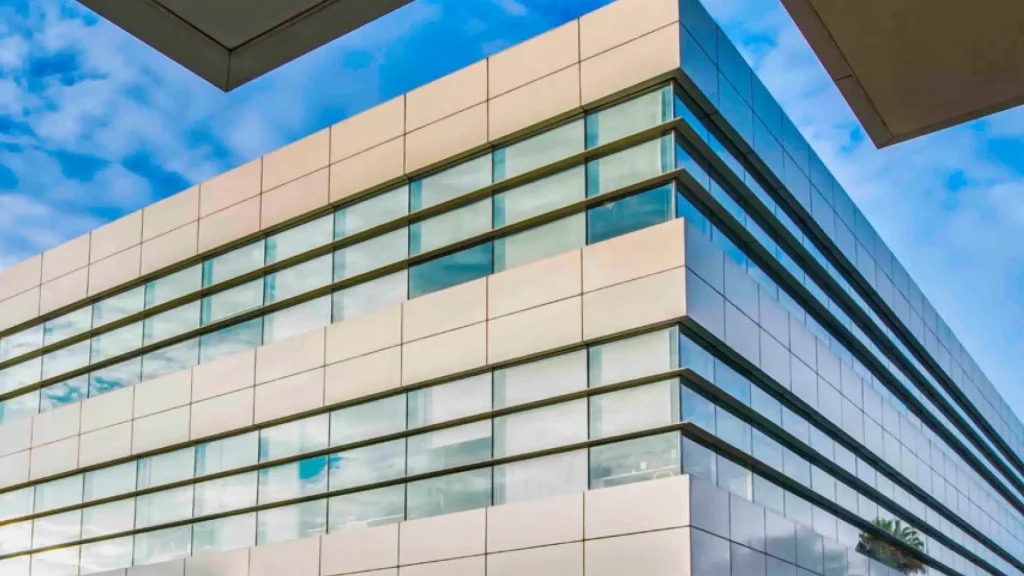
Master plan and architecture
True productivity >
Landscape as strategic infrastructure
TecnoParque’s landscape design was led by architect Mario Schjetnan, one of Mexico’s and Latin America’s most renowned landscape architects and urban designers. A graduate of UNAM with a Master’s degree in Urban Design from the University of California, Berkeley, he was awarded Guggenheim and Ford Foundation fellowships to study at the Harvard Graduate School of Design, where he also served as a visiting professor. Honored with the ASLA President’s Award of Excellence, his most notable projects include Bicentenario Park, the Culiacán Botanical Garden, Chapultepec Forest, La Mexicana Park, and TecnoParque.
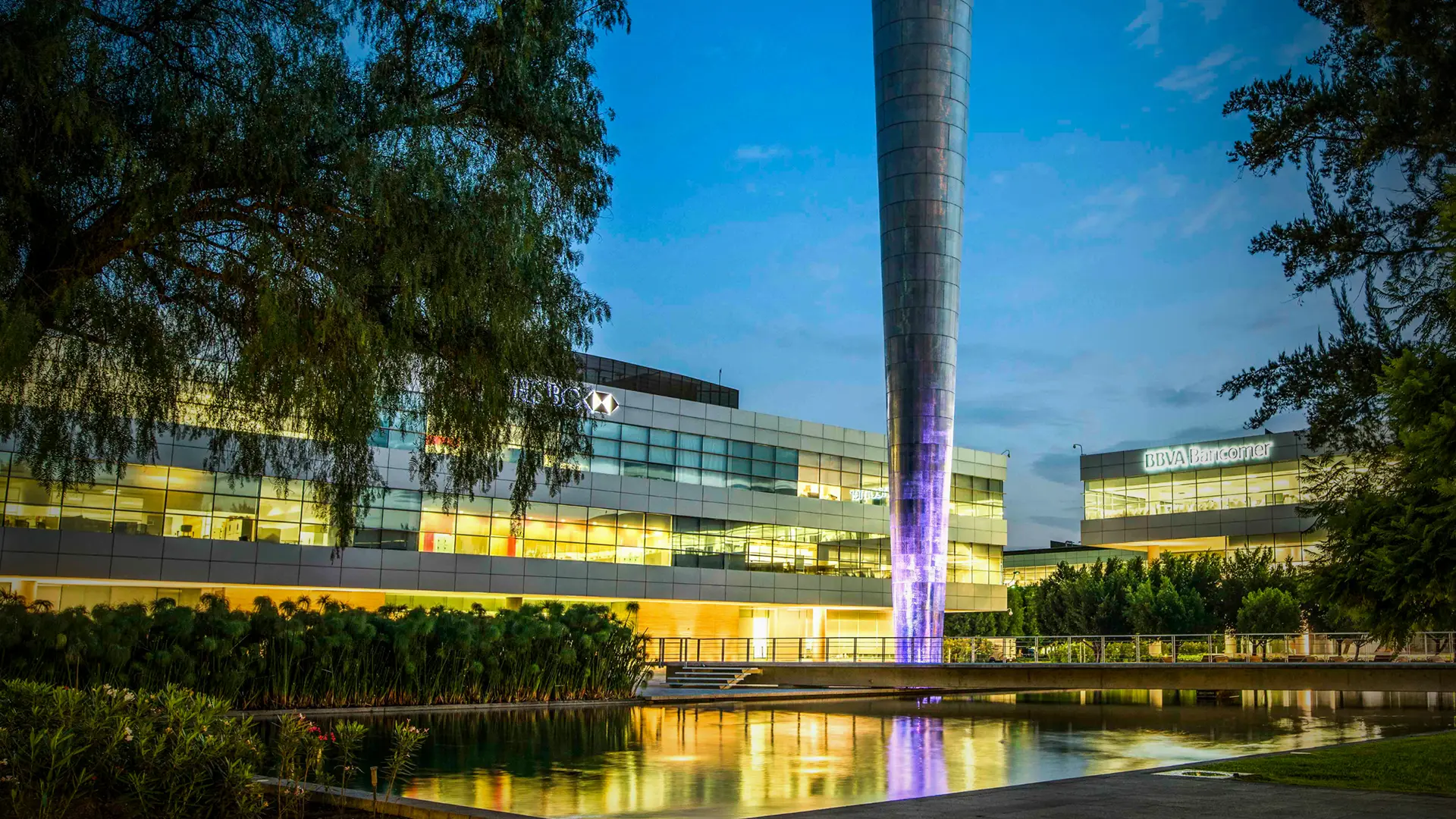
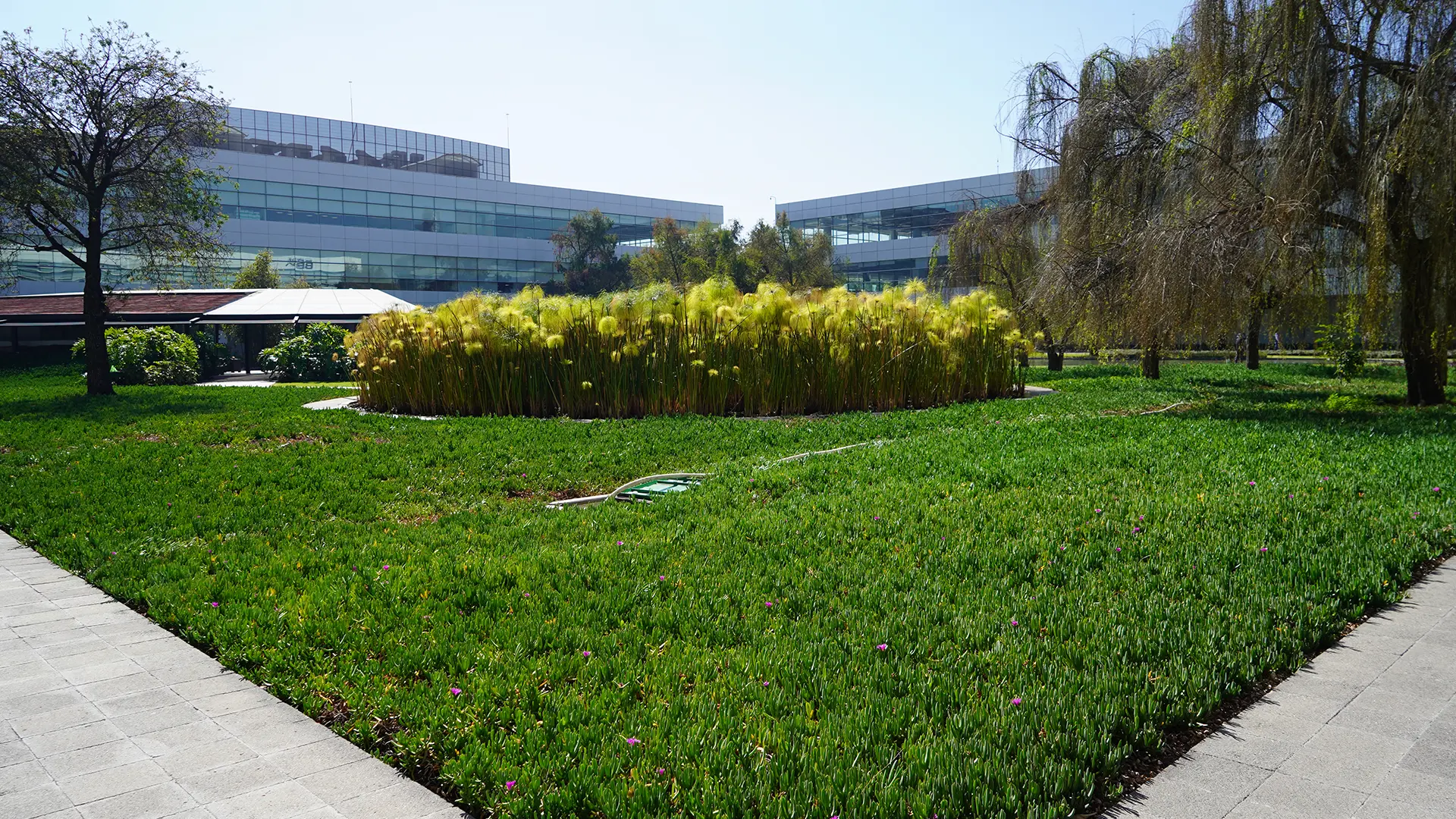
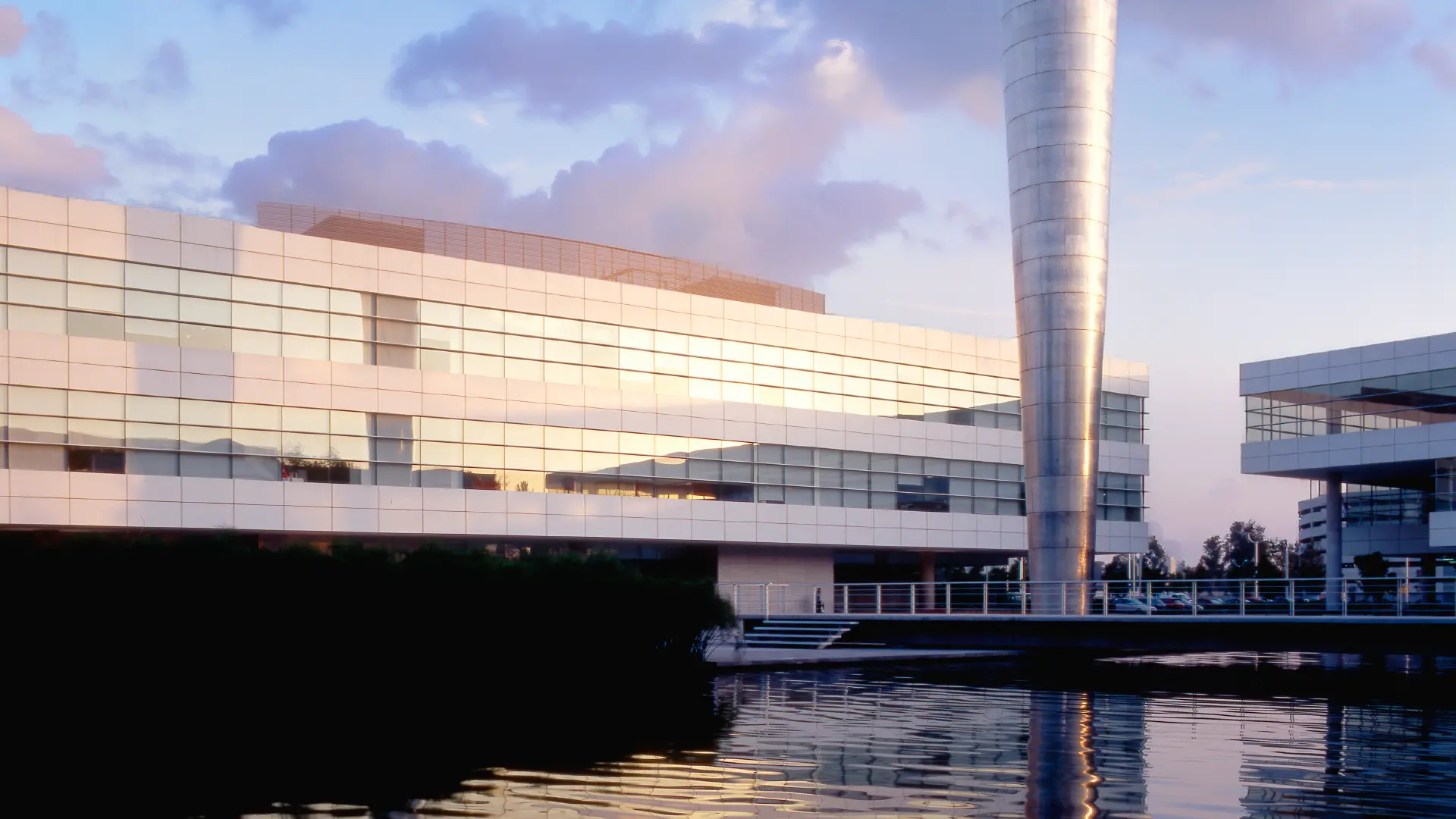
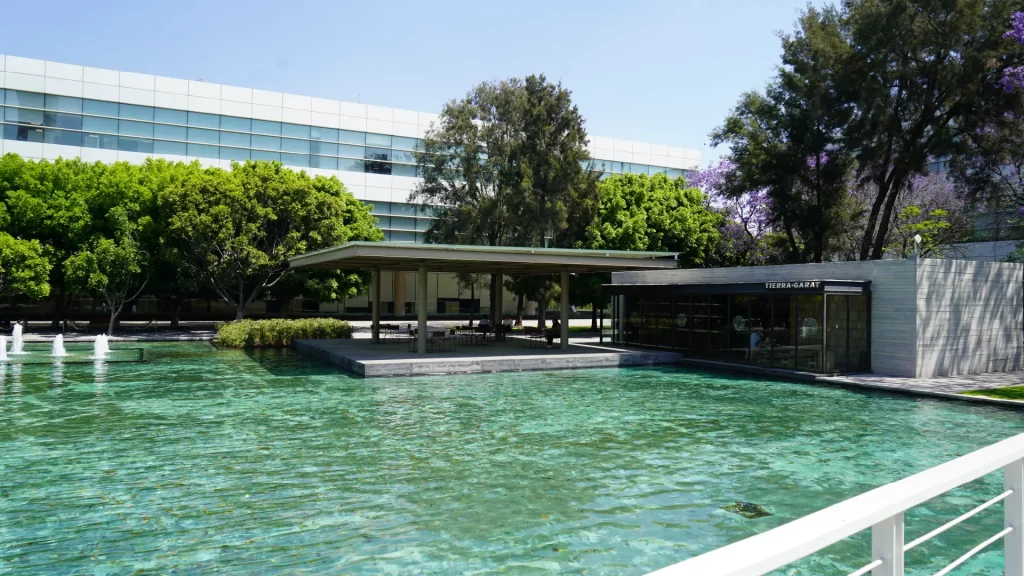
At TecnoParque, landscaping is not merely ornamental; it structures the entire campus experience. Interior gardens at the heart of each building, over 700 trees, two man-made lakes, and a waterfall at one of the pedestrian access points moderate the microclimate, elevate environmental quality, and establish the campus as an authentic oasis within Mexico City. The buildings seamlessly integrate into this horizontal design logic, prioritizing natural lighting, structural efficiency, and operational flexibility.
This biophilic approach is backed by environmental research: a University of Exeter study documented increases of up to 15% in the psychological well-being of employees with access to natural elements in their work environment, while the 2015 Interface Human Spaces Report found that spaces featuring natural light, plants, and green views elevate productivity by up to 6% and creativity by up to 15%. Furthermore, studies from Harvard's Center for Health and the Global Environment associate these environments with lower employee turnover, a key factor supporting talent acquisition and retention.
“Provocación” Sculpture
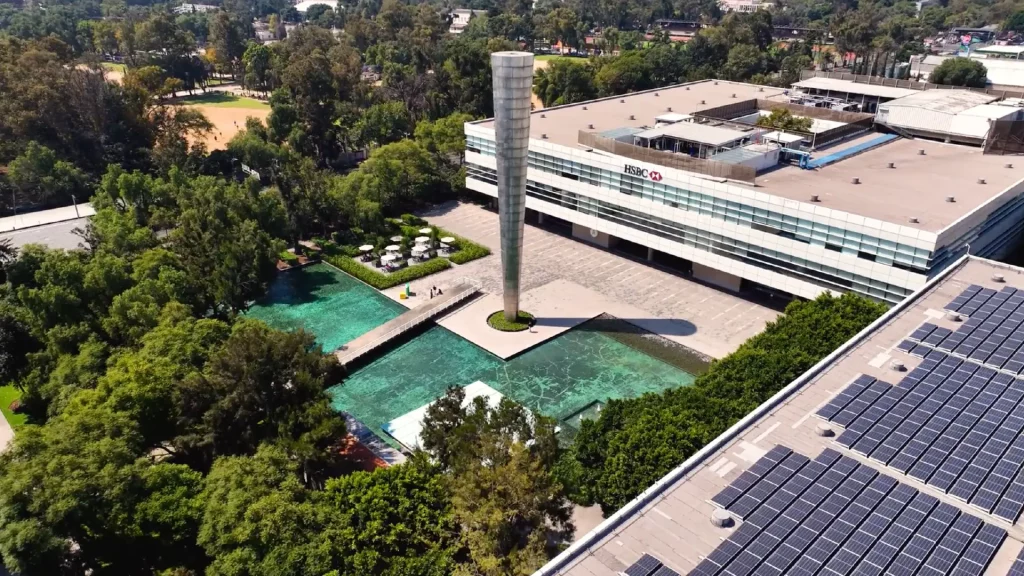
Standing beside one of the campus lakes is “Provocación,” a 36-meter-tall sculpture designed by architect Enrique Espinosa Fernández. This inverted stainless steel obelisk—chosen for its durability and the way it dynamically reflects TecnoParque’s clouds, surrounding foliage, sun, and sky—defies conventional design, emerging as an iconic landmark along the complex’s main pedestrian pathway and symbolizing the boldness and innovative spirit that define the campus.
Water management in a city under structural stress
In a city facing structural water and energy challenges, TecnoParque integrated environmental engineering solutions from its inception. The campus features over 35,000 m² of rainwater catchment surface area: rooftops channel stormwater into an independent network that directs it to absorption wells for aquifer recharge. Additionally, three on-site wastewater treatment plants process approximately 4,700 m³ of wastewater per month, reusing it for landscape irrigation and reflective water features. This sustainable model significantly reduces pressure on the municipal supply grid and contributes to subterranean water recharge in one of the metropolitan areas most vulnerable to water stress.
Energy & Carbon Footprint Reduction
The development features over 1,400 installed and expanding solar panels with a capacity exceeding 400 kW. Currently, approximately 70% of total energy consumption is derived from renewable sources through biomass cogeneration, enabling tenant companies to significantly reduce CO2 emissions, optimize energy efficiency, and strengthen their corporate ESG strategies across the campus.
Critical infrastructure and structural resilience
TecnoParque’s buildings were engineered under the Group A structural standards of the Mexico City Building Code—the same rigorous criteria applied to high-priority strategic facilities such as hospitals and schools. Over 19 years of operation, the campus has maintained a flawless zero-incident safety record, the direct result of exceeding standard Class A+ requirements. Indeed, it could be said that the ultimate benchmark for structural safety and security in corporate real estate is, quite simply, TecnoParque Class. This translates into total peace of mind for personnel, reduced corporate insurance premiums, and teams entirely focused on unlocking their full potential.